
Networks vs Job Boards
When most small business owners decide to hire, their first instinct is to post a job on Indeed and wait.
That’s usually a mistake.
Before you ever touch a job board, you should start much closer to home.
In this article, I’ll walk you through the first and most powerful place to look for candidates: your personal and business networks.
Start With Your Personal Network
This is what I call the “word-of-mouth hire.”
Some people jokingly call it nepotism, but when done correctly, it’s actually one of the highest-quality sourcing methods available to small businesses.
Here’s why:
People who know you will only recommend someone they trust.
They’re not going to say:
“You should hire my nephew. He’s terrible, but he needs a job.”
They’re going to say:
“My nephew is hardworking, reliable, and looking for a great opportunity. I’ll vouch for him.”
That act of vouching matters!
You’re not just getting a resume, you’re getting a reputation attached to it.
Why This Works So Well for Small Businesses
Large corporations have rigid hiring rules.
Small businesses often don’t.
Unless you’re unionized, there’s nothing requiring you to publicly post a job before hiring someone. You can legally hire someone recommended through your network.
And often, those hires are:
- Faster
- Higher quality
- Better cultural fit
- Lower stress
Most jobs aren’t advertised publicly.
They’re filled through connections.
Why You Shouldn’t Start with Job Boards
Here’s what happens when you post on a major job board:
- You receive 100–500 applications.
- Many applicants have zero relevant experience.
- Some are applying just to satisfy employment insurance requirements.
- You waste hours filtering low-quality resumes.
Yes, posting on a job board is easy.
Copy. Paste. Click.
But easy doesn’t mean effective.
You want quality before quantity.
Step 1: Reach Out to Family and Close Contacts
Start small.
Send a message to:
- Your immediate family
- Close friends
- Trusted contacts
- Business peers
Examples:
- Group chats
- Direct messages
- Text messages
- Emails
- Even old-school phone calls
You might say:
“I’m hiring for a new role. If you know someone reliable and hardworking, please let me know.”
This is your closest circle.
These people know you and your standards.
Step 2: Post on Your Personal Social Media
Next, expand slightly.
Post on:
- Your personal Facebook account
- LinkedIn profile
- Personal Instagram (if appropriate)
This is not your business page yet.
This is still about tapping into people who:
- Know you
- Like you
- Trust you
Even if you only have 50–100 connections, that reach can be powerful.
Step 3: Use Your Customer and Supplier Email Lists
Now we expand further.
If you have:
- A customer database
- An email list
- Supplier relationships
You can ethically leverage them.
Send a message like:
“We’re expanding and hiring. If you or someone you know may be interested, please forward this message.”
Customers already:
- Understand your business
- Have interacted with you
- Know your brand
They may not be as strong as a direct referral, but they’re warmer than a stranger on a job board.
Suppliers may also know someone looking for work, not necessarily their employees, but someone in their extended network.
Step 4: Post on Your Business Social Media
Only after trying your inner circles should you move to:
- Your business Facebook page
- Business Instagram
- LinkedIn company page
At this point, you’re reaching people who:
- Follow your business
- Have seen your content
- Recognize your brand
They may not know you personally, but they aren’t complete strangers either.
Why This Order Matters
This entire strategy is about moving from:
Highest trust → Lowest trust
- Family & friends
- Personal network
- Customers & suppliers
- Business social followers
- (Next step) Special hiring locations
- (Last resort) Job boards
Every layer expands your reach but decreases personal connection.
Start with the highest-quality pool first.
When Should You Use Job Boards?
Job boards are not evil.
They’re just not step one.
They become useful when:
- Your network didn’t produce candidates
- Your special hiring locations also didn’t produce candidates
- You need a larger applicant pool
- You’re hiring for specialized roles
In the next article in this series, I’ll cover the “special hiring locations,” niche and targeted places to post before going fully public on large job boards.
Want the Full Hiring System?
If you want a structured checklist covering:
- Sourcing
- Resume screening
- Interview questions
- Reference checks
- Final decision scoring
I created an eBook called:
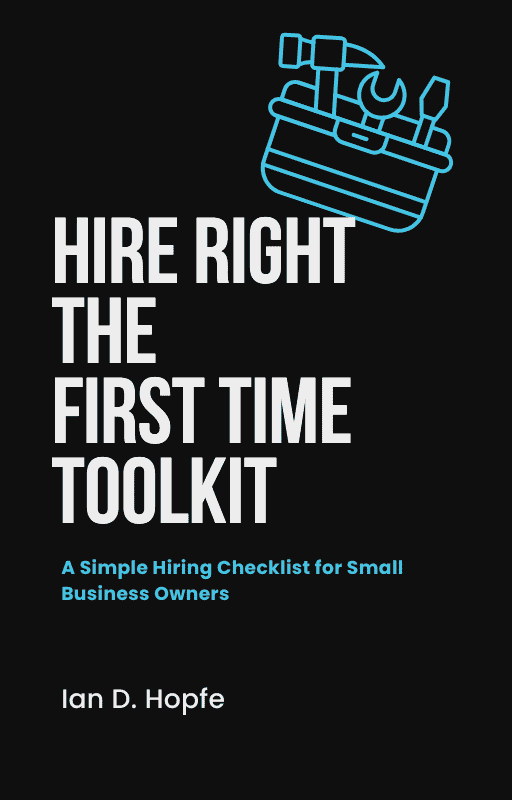
It includes:
- Step-by-step hiring roadmap
- Sample job ads
- Templates
- Checklists
You can also find it inside the 1-2-3 HR community.
Join the 1-2-3 HR Community
If you’re a small business owner who wants:
- Ongoing hiring support
- Practical HR guidance
- Tools and templates
- A place to ask questions
Join my free 1-2-3 HR community on Skool.
That’s where we go deeper.
Final Thought
Hiring doesn’t start on Indeed.
It starts with the people who already know and trust you.
Start there first.
Then expand strategically.